I Dare You 10/07/2011
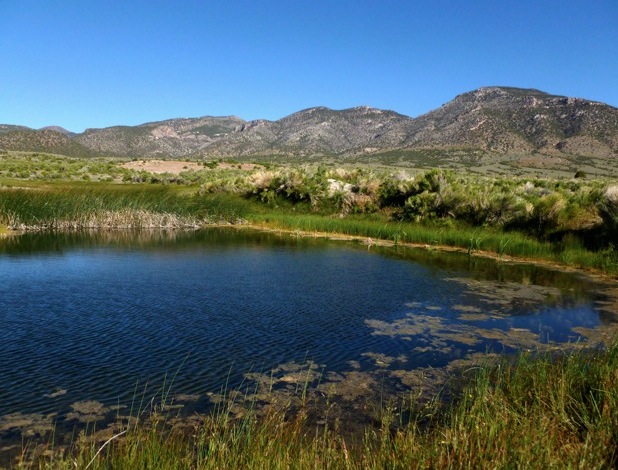
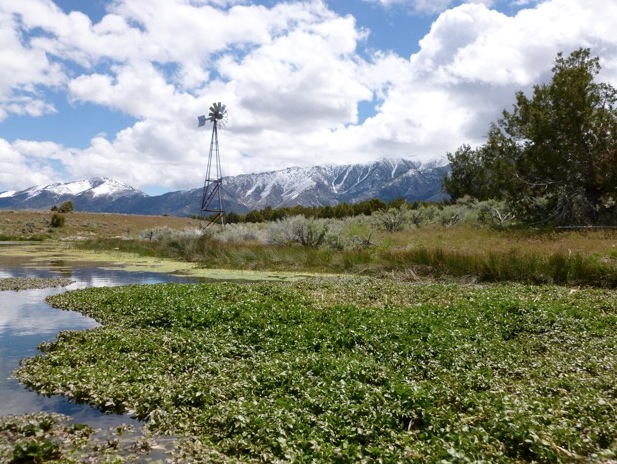
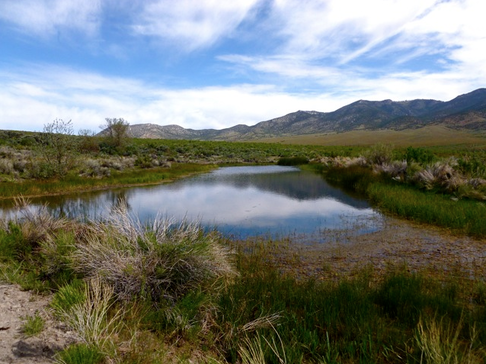
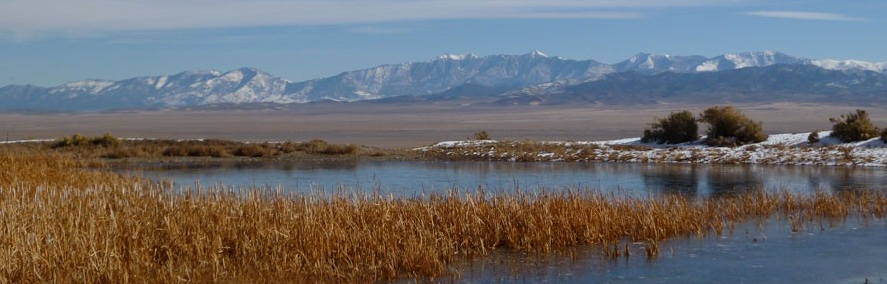
One of the most profound things you can do on this planet at this time, it seems to me, is to lie down on the earth, belly down—and really that in itself is so good-- lie down and say thank you. That is it, my challenge. Do it more than once. In different places. Don't put it off. With winter coming, the belly-challenge will be more challenging! Thank you, Sevier River. 1 Comment Dreaming of Songbirds 08/05/2011
My former cat Pete, now living on sixty acres of upland valley paradise, seemed always to get it right: play with abandon, climb any trees willing, keep neurotics at bay (oh, what an arsenal of weapons Pete had for keeping clear boundaries), lose toes, lose fights, win dominance in your own pacific home. For all his crusty bossy masculine ways, Pete was a full-on lover. When I moved to Boulder and could not take a cat, didn’t the person coming to buy my loveseat scoop him up and say she knew the perfect home, with cows and kids and roadless horizons where he could hunt outdoors all day? Pete adopted me in the country, and to the country he returned. Now, I live in high-density housing, where you could toss four different neighbors hot dog buns off the back deck if they called for ‘em. We are packed in tight. Rather than stay inside or drive to a park, I looked out all my windows and called up beauty. Wherefore art thou? I asked, from the balcony. I am astonished to report that even in a backyard skinny as two beans laid like an L, beauty came. First, you trim the lilacs struggling in too much shade. You transplant strawberries and a shade-bound climbing rose against a sunny fence. Cover them with shade-giving cardboard for three weeks until new leaves emerge, and they sparkle. Cut curving bed lines and whack out sod, an hour or two each morning. Hang a bird feeder. Sink a used post to support the new grape vine. Use the gravel under the deck to start a pathway. Make borders with hand-sized rocks. Move the hummingbird feeder three times, without luck, till you tie on a lucid red ribbon, then watch from the balcony as the lightning birds feed. When you love your soil, love your views, love your neighbors’ sumac trees’ exotic foliage, dream of eggplants warm with sun, dream of iris, dream of songbirds, you are Pete, who grabs every moment out of doors and shakes it, until all the good falls out. If you are too young yet to love gardens, grow old. Plunge 07/31/2011
Hiking in Rocky Mountain National Park yesterday, I sang—heaven help me—“Rocky Mountain High." I pondered a Henry James novella I’d just read, “The Beast in the Jungle.” Because I wore brown-tinted sunglasses, the beetle-kill pines stood out on every slope, and I could not feel anything but implicated in and convinced of our changed planet. In James’ story, the hero John Marcher misses the event of his lifetime. He feels chosen by an obscure destiny, waiting as if anointed for some beast to leap onto him and render his life profound. May Bartram, the only friend who knows of his obsession, stands beside him for decades, waiting, but Marcher’s self-absorption is so complete he only realizes when flinging himself on May’s grave that he has missed out on her love. That was his unrecognized beast. The twists and turns of James’ syntax far exceed plot points, and I dismissed “The Beast in the Jungle” as a windy staid study in the human ego; profound—the beast is within not without us—and a dated sleeper written by a man who spent all his time indoors. But as I hiked the thousand feet up toward Lake Helene, surrounded by vast browning slopes, the power of his novella came at me from an unexpected quarter, haunting my climb. James’ protagonist fit perfectly our environmental dilemma: we cannot really love the earth, though it offers itself, so we use it and simultaneously feel cut off from it, valuing our self-importance more than the opportunity to genuinely live, which makes us unable to stop pillaging, unable to stop missing the point, and we're just about to throw ourselves on its grave in misery and cowardice, like James' hero. Empty, when what is offered us is so full. I have found no good way to face such a grand-scale environmental demise. Which leaves me in the Jungle with John Marcher. Whatever you can do to plunge into this love, do it now. News From the Front 05/02/2011
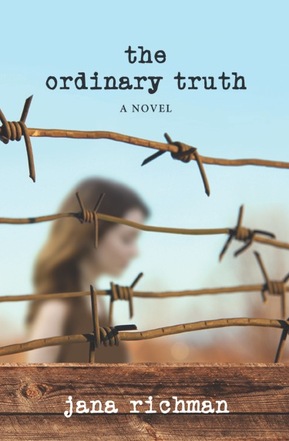
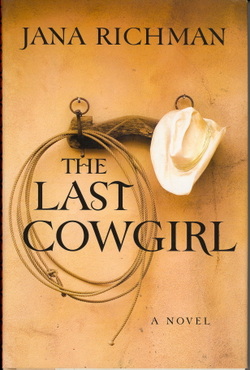
Well, the packing and cleaning and long-haul driving are behind me. I now live in Boulder, Colorado. I can’t yet say what I’ll be doing to earn a living. Here’s what I know I’ll be doing every day. Boulder isn't so much a city as a network of trails connecting green space. Most of which isn't actually green, it's dry prairie and curling creeks and old tree snags left for roosting. Five minutes from my home, on foot, I’ll be chatting up my new neighbors: egrets, foxes, mallards, kestrels, coyotes, prairie dogs... Canada geese and white pelicans! I love pelicans more than I can say. A flock of five winged by me on yesterday’s walk. Today, my mutt Sal swam where South Boulder Creek bulges into a small lake, and then she swam again aways downstream. Being the friendly sort, Sal wanted to meet every prairie dog we passed. And that was a lotta prairie dogs. R-e-s-p-e-c-t, that’s what Boulder city planning means to me. No matter where you live, scruffy undeveloped land and all of its many inhabitants are your neighbors. Isn't that every kid's dream? A playground as big as—well, as big as the "church of the blue dome," to quote my outdoorsy nephew. I may just buy an old snowmobile suit, flatten all four tires on the Buick and cycle everywhere. No one knows me here. And green is such a flattering color. P.S. What's not to love?! Torrey House Press is a welcome new press in Utah. Browse their website awhile! Here's my review along with other book reviews of great Western reads. “The Last Cowgirl” is a page-turner of a different sort. Or rather for a different audience. If you love the land, puzzle over our abuse of it, and wonder why you continue to live in (or near) Utah, the “Land of Cognitive Dissonance,” take a ride with Jana Richman. It’s a rough-and-tumble ride over dessert terrain just west of the Salt Lake Valley but unknown to many. If you listen closely, you’ll hear you can’t deny the land. Young Dickie Sinfield sets her heart against life in the rural backwater of Clayton, Utah. Her father George wants nothing more than to live a cowboy’s life, so he packs up his family of five and moves them onto a ramshackle ranch when Dickie is just eight years old. Due to a string of ranch-related accidents, Dickie sees herself as a fragile outsider in her father’s rugged life. Dickie won’t go native. But no one in her beleaguered family is better suited to the stark beauty of the Onaqui Valley—sixty miles west of Salt Lake City—than Dickie, and it’s her own self-betrayal that makes “The Last Cowgirl” sing. Told in alternating present tense and flashbacks, this story works backward into your heart like cheatgrass in an unsuspecting sock. Dickie Sinfield is middle-aged, cranky and moderately successful as a journalist in Salt Lake City when she gets news that her big brother Heber’s life was snuffed out in a nerve gas explosion at Dugway Proving Grounds. This takes a very reluctant Dickie back home. In Clayton, we meet Bev, the strongest wisest rancher in the valley, George, Dickie’s tough angry father, Holly, the best friend you wish you’d never had, and Stumpy, a red-headed cowboy raised by his grandpa and chock-full of the range. It is one of the mysteries of good novels, how they won’t let you go. Won’t let you leave them sitting alone for more than a few hours, covers closed. Yes, there are times when the smart-assed closed-off Dickie makes you want to shake her, but “The Last Cowgirl” isn’t only her tale. Richman writes men beautifully. Richman does not flinch from exposing family conflict. Richman knows the secrets of a land so spare the military slaps No Trespassing signs around hundreds of thousands of acres. There are caves in the Onaqui Mountains, there are secret springs, there are wild horse herds handsome with muck and bruises. It is one of the mysteries of human nature, that we can find our home in a place, in people, and be the last one to recognize it. Dickie Sinfield is “The Last Cowgirl.” Drive out past the Oquirhh Mountains to the Onaquis. Sit quietly awhile. Let the silence inform you. Then read Richman’s novel for the backstory. It’s a sad Utah tale very likely to grab your heart. South Onaqui Loop, photos and hiking information BLM Onaqui Herd Management, photos and viewing information Dugway Proving Grounds Survivors, info and articles about chemical, biological and radioactive open air testing Worms Know 05/29/2010
![]() Mental health in dirt, this is my philosophy. Worms know more than we do. They’ve passed millennia wriggling in pleasure, enjoying what most Americans have no idea even exists. I’d advocate tearing up three fourths of the concrete in the U.S., but first—go out in your own backyard, get religion, get the scents in your nostrils and the crust on your knuckles, wear holes in your knees in your gloves in your ignorance of what is great. Get down. I passed the entire day in the garden. I hadn’t worked in the yard since November, no wonder I had a mental max offload. Twenty minutes in the garden releases two days’ stress doing anything else. Forget the word garden, any dirt will do. Sit down in a chunk of dirt and let your breathing mimic the bending of weeds and flit about of birds. Did you know a tanager is large and yellow with an orange head? Do you know what a tanager is? It eats worms from dirt, that’s a hint. My friend Patrick invited me for tea, yesterday. He’s built a little room on the back of his house to house a couch and a basket of bird books and binoculars. He's taped small paper stars on the windows, so the unlearned observer sees blotchy bits along with the active birds. And then learns how to focus. Do you know why the tiny blue-headed lazuli buntings and hummingbirds and quail and copper rose and cherry trees and nandina all live there in his shady, overgrown, water-splashing, flower-scented garden? Dirt. Hop on board, it’s the best train running. Views, friends, foodstuffs, surprises, and day-long reliable delight. Western tanager photo thanks to Birds Amore. P.S. Patrick paved the area under his bird feeders, with brick. That way you can see the birds vs. lose site of them in the grass. And paving prevents the fallen seeds from making mushy green forests under the feeder. You can simply sweep the seeds away. Go Patrick go. P.S. I’ll bet those stars are to keep birds from flying into the window glass. Red, White and Blue 04/13/2010
![]() Red: The color amaryllis blooms turn when they crumple in on themselves after a week-long fantasy display of peachy pink in your south-facing bay window. The amaryllis bulbs you’d left for dead from last year--stuck under an entry table near a heat vent which seems to have done the hibernation trick. Buds poked up late March and, with water, the exhilarated flower stalks grew two inches a day heading for the ceiling! Red begins decay and yet you’re thankful for it. White: The color of apricot blossoms under April snow. Who can say which is better? Who can tell them apart? Blue: The refracted valley light at base of Little Cottonwood Canyon when you’ve just pushed off the Albion chairlift and your goggles haven’t fogged. It’s an inky blue unexplained by weather patterns or the elevation or descent of moods. It’s what you’ve left behind. It is congestion. Three hundred twenty-five thousand minds can disbelieve they impact the earth at all and you know in that distant ink-dark blue floats three hundred twenty-five thousand pounds of wrong. Spring snow is heavy but forgiving. It slows you down so that you see red, white, and blue. A Climate of Change 02/16/2010
![]() I just finished co-hosting my first environmental conference. As organizers go, environmentalists are a fractious bunch. It’s a miracle they ever get anything done. We, we ever get anything done. Passion mixed with devotion mixed with personal bias mixed with a helpless feeling nothing is quite enough to genuinely help the world situation—I’ve now seen these up close and personal. Kindness helps, when the egoing gets tough. The actual conference felt completely different than the planning. It took on the temperament of the guests we’d invited to speak: two labor organizers, a Palestine advocate and a world-class biologist. Strong, smart, informed, gracious, these people knitted together both the issues and the local community. We gathered at the University of Utah this Valentine’s Day weekend to discuss peace, social justice and a healthy planet. I think now it was an activist’s love letter, written over the course of two days. Discussions were civil, the press conference rocked, audiences spoke thoughtfully, a brave, eloquent thirteen-year-old boy demanded the Utah legislature show scientists the respect they deserve, award-winning movies inspired and I learned, in addition to the information shared and experts encountered, just how human love can look on a large scale. The answer is genuinely good. RadioActive program featuring Tyler Volk and David Chapman on climate change. A Question of Speed 01/09/2010
![]() In 2006, the human family released 20 times more CO2 into the biosphere than the earth’s own natural rate of annual release. In the early 1960s, humans released 6 times more CO2 than the earth per year. In 1900, the earth and humans were tied at .4 billion tons of carbon per year.* We are fast-burning our way to breathlessness. And in this escalating race, it is human beings not the earth who will lose. We can’t wait for global policy-makers to slow the world vehicle. That’s the sneaky reality of such rates of speed. Each one of us can do radical good—change one life from consumption to creation. Which might inspire other lives to step up and slow down. *Figures thanks to Tyler Volk's CO2 Rising (see video) List of Outlandish Easy Fixes to Slow CO2 Overkill:
| All Lit Up:
|


RSS Feed