Richardson book website
  • Tributary
  • Guest House
  • About
  • Blog
Payback Time* 01/07/2012
1 Comment
 
How many books have you read and loved?
Picture


How many
of those books
have you reviewed?


_ Authors have spilled their sweat and inky blood for you. It’s time you paid them back.

We count on online reviews to spread the word and promote our titles. Luckily, an online book review can take just a few minutes. So challenge yourself to review the best ten books you’ve read in the last year. And then do it every year. Contribute reviews to help boost your favorite authors and keep their books from going out of print!

It's simple. Here's how:

On any of the following bookseller sites, enter the title of the book you’d like to review. Then, once you’re on that book’s page . . .

AMAZON--

_ Scroll down past the professional reviews and the “Product Details” to “Customer Reviews.” On the right hand side of the page, there’s a button called “Create your own review.”
Picture
_ You’ll be given the opportunity to create your reviewer name and password. Then you can 1) rate the book with stars, from one to five 2) enter the title for your review 3) type in a written review of at least 20 words. You can then preview your review and post it, once it says what you like.
Picture
_That took five minutes, max!

BARNES & NOBLE--

_ Similar to Amazon, scroll down to “Customer Reviews.” Click on the “Write and Review” button on the right hand side of the page. Create an account for your reviewer self, and then proceed to rate with stars and a written review. You can choose to show your pen name or write an anonymous review.

POWELL'S BOOKS--

Picture
_You click on “Add a comment for a chance to win!” in order to create your identity and then star and review the book. This is right under the “What Our Readers Are Saying” heading.

BOOKSAMILLION--

_ On this site, you can only enter a star rating, so it is fast and easy!

All of these booksellers give you the chance to post your review to Facebook or Tweet it or email it to friends. It’s up to you, how far and how wide you’d like your review to spread its wings.
_

And for the Truly Devoted Reader:

Picture
This is a great website for book fanatics. You can meet other folks with your reading tastes, read reviews by your "friends," write reviews of your favorite and unfavorite books, and win free books on giveaways. It really is a fine way to keep a journal of all you’ve read.

You won't be alone! Goodreads has 6,700,000 members who've added more than 230,000,000 books to their online "shelves."Click here for a pitch from one devoted fan. Or just join the conversation.

It’s easy to sign up on Goodreads. Once you have an identity, you get your own reviewer page. You can enter the name of any book, and it pops up cover and all. You can then read existing reviews, say whether you’re reading it or have already read it, and give it a star rating and/or add a written review.

When you sign up for favorite reviewers, you'll get updates on books they’ve read. You can join groups of like-minded readers. You can also visit author pages, to read blogs and watch book trailers.

Goodreads will send you handy suggestions for titles you may love and a monthly newsletter of what's new in your favorite genres.
Picture
Better still, you can go to authors' pages, and leave encouraging words. If they're active Goodreads members, you will be able to find out what they're reading and reviewing. Wouldn't you love to know what's on your favorite author's nightstand?

_There's a great big network of book lovers.
Why are you reading out in the cold?

*NEWSWEEK reports that one way to get smarter and "Buff Your Brain" is to WRITE REVIEWS ONLINE. I quote: "Anyone can be a critic on the Internet—and you should too. When you like or hate something, review it on Amazon, Yelp, whatever. Typing out your opinion will help you to better understand your own thinking." (Sadly, the online version does not list the 31 ways to get smarter faster. But it does have a link to a great article on meditation and brain happiness by Amy Gross, former editor of O Magazine.)
1 Comment
 
The Subtleties of Grace 09/22/2011
0 Comments
 
* spoiler alert * this book review tells all *
Picture
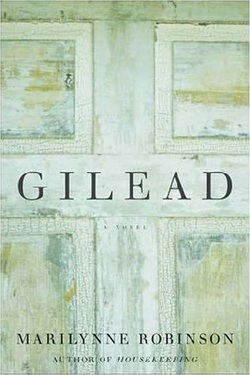
Jesus was not an intellectual. The narrator of Marilynne Robinson’s Gilead, the Reverend John Ames, is. His discourses on things Christian explore the subtleties of grace and love and God’s light, but he himself cannot act to save his godson, the lying, selfish, devious, no-account son of Ames’ best friend the Reverend Boughton. When the prodigal son Jack Boughton returns home to Gilead, Iowa, he receives precisely no help in his attempt at starting a new life. He receives a cold reception, a pointedly critical sermon, unflinching attention to long-held gospel principles and, in the end, one blessing.  

I would not call this Christian behavior.

For the first illegitimate child Jack Boughton abandoned, early in his life, the Reverends Ames and Boughton expended great efforts to assist the mother and child. But for the second illegitimate child, which Jack fathered in mid-life with his black common-law wife—a woman and child he loves and longs to support and live with—nothing. His elderly father cannot be told about the mixed-race couple for fear the news will kill him. He is dying, and in the year 1956 miscegenation is a scandalous thing. The Reverend Ames, also in failing health, does nothing with the knowledge but assess and bury it.

The tastiest bits of the novel involve Ames’ grandfather, an abolitionist preacher who harbored John Brown in his Kansas church and used his ministry to end slavery and save the United States’ soul, violently. Whereas our Reverend Ames refuses to forgive Jack Boughton for abandoning his first child, for squandering fatherhood “as if it were nothing,” and cannot be stirred to assist the older, humbler Jack whose mixed-race family needs a decent place to spend their days together. Jack comes to lay his burden down—could he and his wife and child find a place to live in Gilead? To me that is the central question of this book. But Robinson’s Gilead is a “hill of testimony,” pages and pages of delicate reflection on a spiritual life, so there is no place for Jack.

Jesus spent his ministry with sinners, prostitutes, the poor, the weary and outcasts. John Ames does not even feel the lack of Christlike care offered to Jack Boughton. He uses Jack as a tool for self-examination, a theological sticking point. The only warmly compassionate person portrayed in this novel is Ames’ uneducated wife Lila, who says, “A person can change. Everything can change.”

If religion is not effective in relieving suffering and opening closed doors into grace, why is it worth our attention? For all Ames’ artistry of thought and expression, I would rather have read the life of Ames’ wife. Or his driven grandfather. I’m with the Bible on this one: To him who asks, give.

P.S.
Poking around in the history and life of John Brown, I found he created an anti-slavery group called The League of Gileadites. I doubt this is an accidental link. Brown said at the founding of the League, “Nothing so charmes the American people as personal bravery.” Wikipedia explains that “In the Bible, Mount Gilead was the place where only the bravest of Israelites would gather together to face an invading enemy.” Robinson’s town of Gilead, like the aging failing Ames, is the opposite of this. I hope she intended the irony.


Add Comment
 
Summer Reading 08/12/2011
0 Comments
 
What was great about this summer? I stumbled on a few fine reads, herewith shared.
Picture

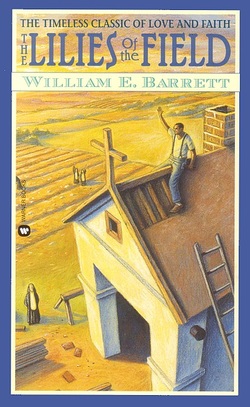
Lilies of the Field—William E. Barrett

Bold simple tale of a man who finds his calling with a flock of German nuns.

The Wild Birds—Wendell Berry

Strikingly true agrarian views of life, delivered by the lawyer of a rural town in Kentucky.

Stargirl—Jerry Spinelli

Ever want to be a free spirit? Remember anyone in high school who ever dared? Stargirl shows you how.

The Beast in the Jungle—Henry James

You may think nothing happens in this novella, until the work explodes inside you the next day.


Cranford
—Elizabeth Gaskell

Doilies and tea in a small English town, simpler days and ways. I confess, I enjoyed the BBC series more than the book. (Dame Judi Dench always delivers!) The dramatic ardency of Gaskell’s novel North and South gives way to gentle portraits of country women at home and in company.

IBS Cookbook—Heather Van Vorous

This woman knows great food. Amazing fallen chocolate soufflé with raspberry sauce. Scrumptious orange flower bread. Zesty fresh mango salsa on grilled shrimp. Delectable roasted cauliflower soup. I cook from this book all of the time for guests, who never guess the dishes are low fat. Unless the recipe says it’s from Van Vorous’ mother or grandmother, it will likely be delicious. Van Vorous' recipes are pure food love.

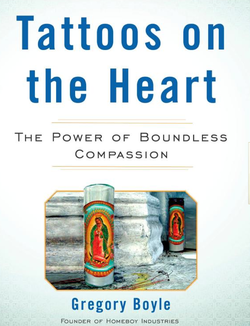
Tattoos on the Heart—Father Gregory Boyle

An oasis of human caring, Boyle works with fatherless young men in East L.A. To quote a friend, Father Boyle “is a fascinating human being, doing more positive good than all the government agencies combined." Bask in compassion. Read his book.

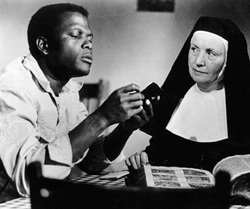
And treat yourself to another compassionate hard-working man, Sydney Poitier in Lilies of the Field. The first words from the Mother's mouth when he hops out of his dusty car,


Picture
"God is good, He has sent me a big strong man."

Thanks to the best picture project for the Poitier photo.
Add Comment
 
Plunge 07/31/2011
0 Comments
 
Picture
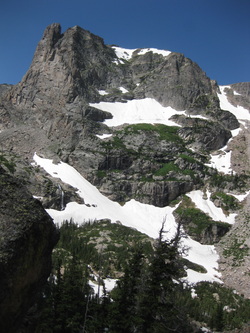
Hiking in Rocky Mountain National Park yesterday, I sang—heaven help me—“Rocky Mountain High." I pondered a Henry James novella I’d just read, “The Beast in the Jungle.” Because I wore brown-tinted sunglasses, the beetle-kill pines stood out on every slope, and I could not feel anything but implicated in and convinced of our changed planet.

In James’ story, the hero John Marcher misses the event of his lifetime. He feels chosen by an obscure destiny, waiting as if anointed for some beast to leap onto him and render his life profound. May Bartram, the only friend who knows of his obsession, stands beside him for decades, waiting, but Marcher’s self-absorption is so complete he only realizes when flinging himself on May’s grave that he has missed out on her love. That was his unrecognized beast.

The twists and turns of James’ syntax far exceed plot points, and I dismissed “The Beast in the Jungle” as a windy staid study in the human ego; profound—the beast is within not without us—and a dated sleeper written by a man who spent all his time indoors.

But as I hiked the thousand feet up toward Lake Helene, surrounded by vast browning slopes, the power of his novella came at me from an unexpected quarter, haunting my climb. James’ protagonist fit perfectly our environmental dilemma: we cannot really love the earth, though it offers itself, so we use it and simultaneously feel cut off from it, valuing our self-importance more than the opportunity to genuinely live, which makes us unable to stop pillaging, unable to stop missing the point, and we're just about to throw ourselves on its grave in misery and cowardice, like James' hero. Empty, when what is offered us is so full.

I have found no good way to face such a grand-scale environmental demise. Which leaves me in the Jungle with John Marcher.

Whatever you can do to plunge into this love, do it now.
Add Comment
 
Red Jackets 05/24/2011
0 Comments
 
Picture
I just received my second royalty check for GUEST HOUSE. The checks come every six months in a large white folder packed with info and joy. I sold 213 copies between December and May. In many circles, those are small potatoes. The way I figure it, "I am a few miles luckier, a few clouds wealthier, a few shoes humbler," and the small potatoes are the sweet ones. With red jackets!

So it's time to say thank you to everyone who has purchased a book, atttended a reading or cheered from the sidelines. I am grateful to you all.

If the fates are kind, another novel will emerge from the potato patch. Right now it's rooty research and dreams...

Add Comment
 
Tattoos on the Heart 04/07/2011
0 Comments
 
Picture


I am reading Tattoos on the Heart with tears in my eyes, every chapter. Maybe it’s because I’m fifty-five. Maybe it’s because I know humankind can be kind. Maybe it’s one of those exceedingly rare stories of raising hearts into hope in the midst of a seemingly hopeless situation. Or maybe I just love bread.


Father Greg Boyle planted himself in a tough barrio in Los Angeles many years ago, and like any good Jesuit, he let the sisters in his parish whip up a community salad of caring. Gang activity was overtaking their ‘hood, but these women were mothers with Jesus in their hearts. Whatever the trauma, they were mammas. And mammas didn't close their church's doors to sorrow, violence, poverty or fear.
Picture
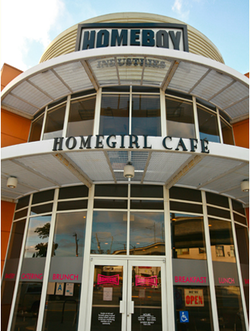
Two decades later, Homeboy Industries is one result, a place where former gang members can learn a trade, lose tattoos and bake and serve sourdough bread. Father Boyle masterminded this gang intervention program, touring and talking about his work to raise awareness and funds.
Picture
If you need a steady dose of goodness, let G-dog give you a tour of his calling among the stressed and oppressed. He believes so strongly in the power of god's unconditional love, that he can hold that space and wait for gangbangers to come into the grace of it. He knows they can come into the grace of it. I love this book for precisely that, Boyle's snapshots of the infallible power of “not two.”*

My favorite quote so far: “Compassion is not a relationship between the healer and the wounded. It’s a covenant between equals.”
Picture
Picture
*From the Stanford Encyclopedia of Philosophy: Zen demands the practitioner to overcome the dualism operative in the everyday standpoint, which it speaks of by using the phrase “not two.” The use of the phrase “not two” expresses Zen's proclivity to favor the simple and the concrete, such that it is not expressed as a negation of dualism.

And here are two great videos of the Homeboy Industries. A documentary is in the works.

Add Comment
 
The Last Cowgirl—as reviewed for Torrey House Press 02/10/2011
0 Comments
 
Torrey House Press is a welcome new press in Utah. Browse their website awhile! Here's my review along with other book reviews of great Western reads.

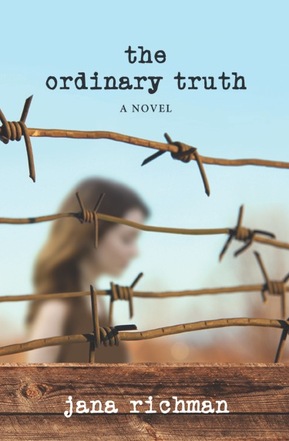
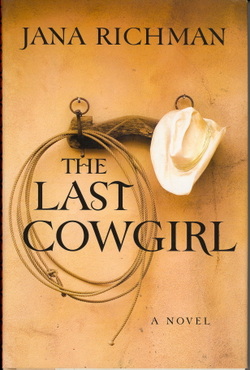
“The Last Cowgirl” is a page-turner of a different sort. Or rather for a different audience. If you love the land, puzzle over our abuse of it, and wonder why you continue to live in (or near) Utah, the “Land of Cognitive Dissonance,” take a ride with Jana Richman. It’s a rough-and-tumble ride over dessert terrain just west of the Salt Lake Valley but unknown to many. If you listen closely, you’ll hear you can’t deny the land.
Picture
Young Dickie Sinfield sets her heart against life in the rural backwater of Clayton, Utah. Her father George wants nothing more than to live a cowboy’s life, so he packs up his family of five and moves them onto a ramshackle ranch when Dickie is just eight years old. Due to a string of ranch-related accidents, Dickie sees herself as a fragile outsider in her father’s rugged life. Dickie won’t go native. But no one in her beleaguered family is better suited to the stark beauty of the Onaqui Valley—sixty miles west of Salt Lake City—than Dickie, and it’s her own self-betrayal that makes “The Last Cowgirl” sing.

Told in alternating present tense and flashbacks, this story works backward into your heart like cheatgrass in an unsuspecting sock. Dickie Sinfield is middle-aged, cranky and moderately successful as a journalist in Salt Lake City when she gets news that her big brother Heber’s life was snuffed out in a nerve gas explosion at Dugway Proving Grounds. This takes a very reluctant Dickie back home.

In Clayton, we meet Bev, the strongest wisest rancher in the valley, George, Dickie’s tough angry father, Holly, the best friend you wish you’d never had, and Stumpy, a red-headed cowboy raised by his grandpa and chock-full of the range.


Picture
It is one of the mysteries of good novels, how they won’t let you go. Won’t let you leave them sitting alone for more than a few hours, covers closed. Yes, there are times when the smart-assed closed-off Dickie makes you want to shake her, but “The Last Cowgirl” isn’t only her tale. Richman writes men beautifully. Richman does not flinch from exposing family conflict. Richman knows the secrets of a land so spare the military slaps No Trespassing signs around hundreds of thousands of acres. There are caves in the Onaqui Mountains, there are secret springs, there are wild horse herds handsome with muck and bruises.

It is one of the mysteries of human nature, that we can find our home in a place, in people, and be the last one to recognize it. Dickie Sinfield is “The Last Cowgirl.” Drive out past the Oquirhh Mountains to the Onaquis. Sit quietly awhile. Let the silence inform you. Then read Richman’s novel for the backstory. It’s a sad Utah tale very likely to grab your heart.

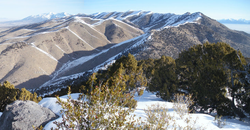
South Onaqui Loop, photos and hiking information
BLM Onaqui Herd Management, photos and viewing information
Dugway Proving Grounds Survivors, info and articles about chemical, biological and radioactive open air testing

Add Comment
 
Repentance, Plain and Simple 11/25/2010
2 Comments
 
Picture
My stay in Utah is nearly through. I returned to my ancestors’ home ground four years ago, after a thirty-year absence, in order to write, think, feel, work and care for my elderly mother. Our love has come full circle. She’s ninety-two, my dearest friend and the particular course of her memory loss creates a world more positive every day.

Utah has given other gifts. I’m a published writer with a royalty check taped to my refrigerator. (A first.) A giant walnut tree shades my house, on a corner lot far from the sketchier parts of Salt Lake. (Both firsts!) I no longer need a man to feel whole so of course the universe provided one, a talented realized man who made the break out of Utah with me thirty years ago and comes now to take up where we left off—only we’re both ready this time. He's like a Cezanne painting with a sense of humor. All my dials spin with Jeff.

To begin to say thanks and good-bye to Utah, I’m going to quote from a newly published Utah author whose sensitivity to the austere desert environs here makes my heart muscle relax and my mind quietly expand. Ahhh. Images of Antelope Island in the Great Salt Lake, coupled with George B. Handley’s words from his newly released Home Waters.


“Collective memory involves forgetting as much as remembering.”
Picture
Picture
“Anonymity… is a discovery of our human nothingness in the face of beauty, a discovery that is... our unique human privilege.”

Picture


“Love of beauty motivated by nothing more than a fear of death is hedonism, but acceptance of death without deep attachment to beauty is pure nihilism.”


Picture
"Landscapes are never generic."
(A particular favorite of this landscape designer.)
Picture


“Ecological restoration is neither technophilia nor antihuman escapism.
It is repentance, plain and simple.”


Let’s all take a moment to repent.


And to rejoice. Handley's love of place requires this, too.

"...whenever I sat down to write about the watershed, I found myself increasingly unable to separate place from story, outdoor recreation from ecological and spiritual restoration, the present from the past, and, even against my will, the historical from the personal.

"At first this was distressing, but it became apparent to me that to write in this fashion was a way of resisting the disintegration of landscape, community, and memory that characterize modern life. This is the way of things with watersheds. They gather tributaries from upstream that connect all that is above, beneath, and beside, and give life through unseen processes of exchange."

Those unseen processes of exchange are the world's thanksgiving. Like water, like stones, like stands of wild grasses, our unseen work connects us all. The name of my upcoming novel is Tributary. Handley's last sentence electrified me.

Thanks to Jody Barone for photos of our trip to the Utah Mediterranean.

Picture
2 Comments
 
Here’s What the Seventies Felt Like 09/19/2010
0 Comments
 
Picture
I had a whole day off, today. And I did nothing. Nothing but read Judith Guest’s Ordinary People. If you weren’t born by 1976, you’ll have to take American Beauty, nix the gay theme, keep the parents and lay most of the plot onto the kid. Robert Redford made a blistering movie from Ordinary People and won himself instant acclaim, as a first-time director.

That’s what the seventies felt like.

Sun blasts and foul clouds of something burning. Happy town—wherever your happy town was—simultaneously shining and black with shadows. The Viet Nam war stampeded sense and honor and justice pretty much off the map, beating up the second half of the decade with the horrors of the first.

And yet, there was Leo Kottke guiding us through the fog with his “geese farts on a muggy day” voice and intricate guitar work. Nixon bludgeoning the presidency, which had had plenty of pounding before the Watergate scandal. The Hite Report spilling our sexual beans while a talking seagull taught us all to individuate.

It was a mixed bag, the seventies, a wheel with half its spokes broken, a chaotic field of change that has helped open the entire world to overweening greed. I don’t long for the seventies but I wish we had the years back, in order to do less harm.

Revisiting the decade of my twenties today reminded me of the brain of the purple mountain. I read Guest’s novel propped on the couch with a sunny view of Mt. Olympus out my window--a violet mountain against the blue sky. Leo Kottke named an early song of his “The Brain of the Purple Mountain,” and I’m guessing not many people know that his title is taken from a great line of poetry.

When Alfred Lord Tennyson was twenty-one, he spat out a beautiful curse against sophists, over-thinkers, worldly experts, wise men, the clever. His poem is called “The Poet’s Mind.” It's from 1830. FYI, the merry bird is the poet:


In the heart of the garden the merry bird chants,

It would fall to the ground if you came in.

In the middle leaps a fountain

Like sheet lightning,

Ever brightening

With a low melodious thunder;

All day and all night it is ever drawn

From the brain of the purple mountain

Which stands in the distance yonder:

It springs on a level of bowery lawn,

And the mountain draws it from Heaven above,

And it sings a song of undying love;

And yet, tho' its voice be so clear and full,

You never would hear it; your ears are so dull;

So keep where you are: you are foul with sin;

It would shrink to the earth if you came in.


I love it that this poet gets preachy. That he dares to smack at the powerful, who've lost their respect for beauty and the still small voice in them which marvels, which waits, which adores.

The best definition of sin I’ve heard is “missing the mark” (hamartia in Greek). We are all foul with sin if we do not marvel at purple mountains, if we drive through days ignorant of the water drawn from heaven singing its song of undying love.

The water is not a metaphor. Its song is everywhere water flows freely. A ditch, a gully, a city creek, a faucet, your garden hose, a stream. Turn on your irrigation system if that's all the water nearby you. If you cannot hear it--hear and feel and receive it--read more poetry. Listen to Leo Kottke. Listen again. Let Judith Guest take you through hell to reach a moment where a father and a son connect. Find your mark.
Because, to bring Joni into the mix, "we've got to get ourselves back to the garden."

I know this is a tad stream-of-consciousness, but so were the seventies!

Wish I could have found a link for "When Shrimps Could Whistle." Any Kottke is good Kottke, so enjoy what I did find!

Add Comment
 
Kids Worth Knowing--guest blog 04/28/2010
0 Comments
 
Picture
Everything a novelist needs to know is learned by age four. I don’t remember which great writer said this, but there’s truth in it. The furious beauty of childhood stamps us for life.

Why then aren’t there more novels that feature great kid characters? Let me name a few of my favorites...

To read the entire guest blog, go to Rundpinne.

Add Comment
 
<< Previous

    All Lit Up:
    love, mayhem, literature
    _______________

    RSS Feed

    Categories

    All
    Environment
    Miscellany
    Reading
    Simple Living
    Spirit
    Trees
    Winter
    Writing


    Favorite quotes:

    "I am a few miles luckier, a few clouds wealthier, a few
    shoes  humbler."
    —Jeff Fuller

    _ "Words follow a path with heart.
    Let nothing come between you and your heart."
    – Red Hawk

    Favorite tree:

    Catalpa in snow with long bean pods dangling.

    Favorite place:

    The middle of nowhere.

    Currently reading:

    The Scholar of Moab
    The White Indian Boy
    No Time to Lose: A Timely Guide to the Way of the Boddhisattva

    Just finished reading:

    Junket
    The Help
    The Professor's House

    Favorite blogs:

    Headbutler, your cultural concierge of good taste

    Picture

    One Woman's Meat: Notes from Escalante

    Picture